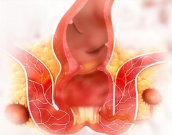
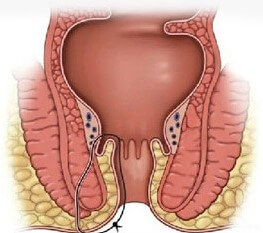
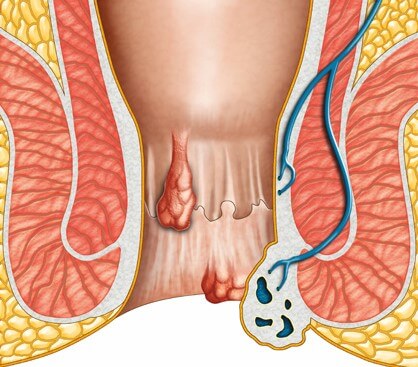
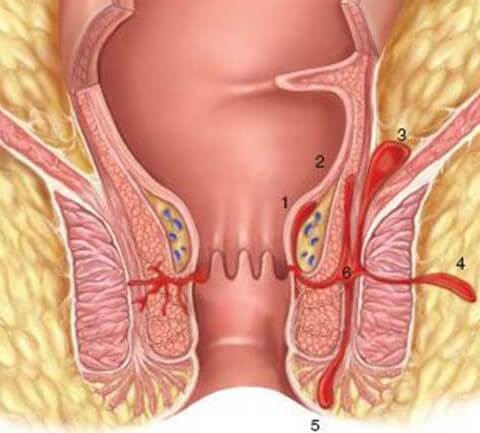
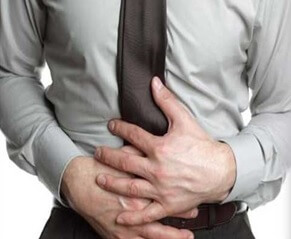
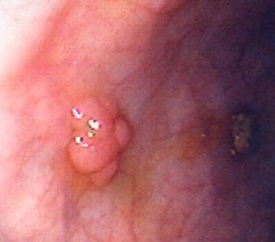
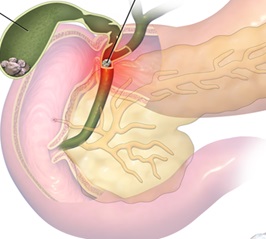
There are 3 anal cushions which helps in lubricating our anus and help in defecation. These cushions contain blood vessels. When these cushions increase in size thereby causes pooling of venous blood then they are pathologically called piles. As everyone of us do have these cushions so approximately 50 % of population will have Piles/ Bawasir problems at their lifetime
Common Symptoms of Piles
A hard and painful lump may be felt around the anus
Blood in stool
Itchiness around the anus
Mucus discharge through anus
Pain while defecating
The area around the anus may be red and sore
Pelvinic's Approach Towards Problem
Piles treatment has been revolutionised over the years by arrival of new age technology like Stapler / LASER/ RFA/ Harmonic / DGHAL.Dr Sandip Banerjee one of the leading Colorectal surgeon practises in all above methods of treatment. But the decision of the modality depends on grade of hemorrhoids/ piles.
Laser treatment for Piles/ Hemorrhoids/ Bawasir
Dr SANDIP BANERJEE a leading Coloproctologist is practising LASER surgery for hemorrhoids for last 10 years. According to him, LASER energy is delivered by fibre directly to piles vessels and obliterate the entire vessel. This selective obliteration prevents inner anal lining and sphincter muscle which maintain continence from getting damaged. LASER causes shrinkage and development of new tissue thereby preventing recurrence. All these in just few minutes with no cut/scar/charring and can be done at clinic with no hospital admission and very early recovery.
Fistula is a tract which connects outside perianal skin with inside anus. Due to maturation of tract over years a small amount of stool passes through the tract and cause problems. Fistula can be either simple fistula or complicated fistula. Either of them requires surgery. Once developed, fistula can be a nightmare specially in achieving complete treatment.
Common Symptoms of Anal Fistula
Persistent discharge of pus through an external opening in perianal skin.
Pain and swelling
Fever
Pelvinic's Approach Towards Problem
The biggest challenge in treating fistula is to prevent recurrence. World over the recurrence rate of fistula is 5 to 7 %. According to Dr Sandip Banerjee, a leading Coloproctologist , a successful fistula surgery requires proper diagnosis, a good MRI done and well reported, the surgeons expertise and the method of surgery. Dr Sandip Banerjee does LASER FILIAC, LIFT, Fistulotomy for fistula. Choice of surgery depends upon the type of surgery. In almost all cases Dr Banerjee does in single settings and the success rate with him is more than 90%
Laser treatment for Anal Fistula/ Bhagander
Dr SANDIP BANERJEE has achieved expertise in treating complicated fistula in single setting by LASER FILIAC surgery. Dr Banerjee deliver LASER energy via special fibers into the fistula tract after proper defining it. LASER is supposed to close and obliterate any abnormal paths in a fistula and also causes destruction of inner lining cells of fistula tract thereby simultaneous obliteration of remaining fistula tract. The tract destruction occurs in a very controlled way and the fistula tract collapses to a very high degree. Compared to conventional surgery LASER energy is better controlled, achieves best results with no cutting or charring of the tract all in few minutes. Can be done in clinic settings.
A small cut or breach of normal anal inner lining results in anal burning like condition called as Anal Fissure. It develops in the background of constipation where hard stool causes tear in lower anal lining due to forceful evacuation. Patient suffering from Anal Fissure do have severe pain in anus or during defecation associated with minimal bleeding in stool. Fissure in Ano once formed causes breach in Anal lining and thereby underlying circular muscles called sphincter muscles exposed and further contraction. Sphincter spasm will further deteriorate the problem of constipation and defecation thereby landing up in vicious cycle with prolongation. Fissure can develop in recent past say 3 to 4 days which are called acute fissure or can be for many days / months with intermittent healing which are called Chronic fissure. Acute Fissure most commonly is seen in pregnant ladies post delivery is mostly treated conservatively with few topical medications and lifestyle modifications whereas Chronic fissure needs some forms of intervention/ Surgery like Laser/ RFA surgery
Common Symptoms of Fissure in Ano
A visible tear in the skin around the anus
Sharp pain in the anal area during bowel movements
Streaks of blood on stools
Burning or itching in the anal area
Pelvinic's Approach Towards Problem
The goal of treatment for anal fissures is to break the cycle of spasm of the anal sphincter and its repeated tearing of the anoderm. Majority of patients (70%) respond to medical management by Dr Banerjee. Remaining cases of chronic fissure requires a day care procedure called Internal Sphinterectomy/ fissurectomy.
Laser treatment for Fissure in Ano
The conventional method of Internal sphincterotomy is now mostly replaced by LASER procedure and according to Dr Sandip Banerjee, more and more patients with Fissure are bow opting for Laser treatment. Laser treatment is the most modern procedure in Fissure and it causes vaporization of of pathological tissue of Fissure without giving additional cut. Very less operating time and is a day care procedure with early resuming to job.
A small pit over lower back in between the buttock folds in young males/ females with hairy butts is called Pilonidal sinus. It keeps on discharging small discharges on and off and never gets better without surgery. Pilonidal sinus requires a medical diagnosis clinical examination and rarely needs any specific laboratory or imaging tests.
Common Symptoms of Pilonidal Sinus
Persistence on and off serous or purulent discharge from a very small opening.
Pain, itching and redness in affected area.
Fever during abscess formation
Pelvinic's Approach Towards Problem
Pilonidal sinus needs proper excision. Earlier surgeon use to excise it wholly leading to large defect which resulted in pain and daily dressings. Dr Sandip Banerjee practises a noval method of wide excision with local flap cover which he called as Rotational flap which removes the chances of recurrence as well as open defect. Success rate is 100%.
Laser treatment for Pilonidal Sinus
As compared to conventional surgery, LASER treats Pilonidal sinus in the depth. It is literary a non invasive , totally painless and has great power of healing. LASER removes infected structures and sinuses from the tissue and it takes very much less time in surgery. LASER energy causes minimal or no collateral tissue damage and hence post operative recovery is excellent with no risk of recurrence. Similarly Dr Sandip Banerjee s special flap surgery after total removal of sinus is also very effective and eliminates postoperative pain and long dressings. Dr Sandip has 100 % Result of complete Pilonidal sinus treatment with both LASER and flap surgery with almost zero recurrence
An anal abscess is a painful condition in which a collection of pus develops near the anus. Surrounding our anus there are multiple defined spaces in our buttocks which are potential areas for developing anal abscesses. This often appears as a painful boil-like swelling near the anus. It may be red in colour and warm to the touch. These abscess can be superficial as perianal abscess or deep inside called as ischiorectal abscess. Anal abscess needs surgical drainage at all cost because if not drained they may spread and superficial ones can turn into deeper abscessess Ischiorectal abscess are notorious in sense that even inspite of surgical drainage they may develop into fistula.
Common Symptoms of Anal abscess
Pain, which is usually constant, throbbingand worse when sitting down
Skin irritation around the anus
Swelling, redness, and tenderness
Discharge of pus
Pelvinic's Approach Towards Problem
Surgical incision and drainage is the most common treatment for all types of anal abscesses and is usually successful. According to Dr Sandip, anal abscess should always be drained by Coloproctologist. About 50% of patients with an anal abscess will develop a complication called a fistula.
Obstructive defecation refers to the inability to pass stool through the digestive tract out the rectum. The problem of obstructed defecation is very common in society especially among 20-40 age group of patients. Obstructive defecation can be caused by structural deformities due to hereditary, injury, or age, problems with your digestive tract, impacted stool, or neurologic issues. Women who have had two or more children or had an injury during childbirth which damaged the fascia (the internal tissue that separates the vaginal wall and anus, leading to pelvic floor dysfunction) are at a greater risk for obstructive defecation.
Common Symptoms of Obstructive Defecation Syndrome
Feeling more stool remains in your rectum after attempting to pass stool
Passage of hard stools
Excessive or prolonged straining while passing stool
Routine use of laxatives or enemas
Pain in pelvic area
Pelvinic's Approach Towards Problem
The main concern in ODS cases is how to diagnose the main problem. Other than listening patiently to entire patients’ history, Dr Banerjee recommends additional tests to aid in diagnosis Colonoscopy/ MRI defecography to view the entire colon and look for abnormalities. Some cases even do require Electromyography (EMG) to test for weakness in the pelvic floor muscles and the muscles surrounding the anus. As far as treatment is concern, it’s all depending on the underlying cause of your obstructive defecation.
Treatment may include:
Medications to alleviate constipation
Biofeedback to help you regain control of your muscles
Surgery to repair or correct anatomical deformities (STARR). This surgery uses 2 staplers which are little
different from those staplers used for piles surgery. STARR surgery if done in an ideal patient bears fruitful results. Hence don’t ignore your chronic constipation and related problems.
Laser treatment for Obstructive Defecation Syndrome
The conventional method of Internal sphincterotomy is now mostly replaced by LASER procedure and according to Dr Sandip Banerjee, more and more patients with Fissure are bow opting for Laser treatment. Laser treatment is the most modern procedure in Fissure and it causes vaporization of of pathological tissue of Fissure without giving additional cut. Very less operating time and is a day care procedure with early resuming to job.
Rectal polyps are tissue growths that arise from rectum and protrude into anal canal and sometimes out of it. It may be benign or at sometimes cancerous. They are vascular delicate structures and can easily be detached with gentle manipulation causing excessive bleeding. Sometimes patient do have positive family history and on colonoscopic examination found to have multiple polyps in entire large bowel.
Common Symptoms of Rectal Polyp
Blood in the stool or rectal bleeding
Pain, diarrhea, or constipation that lasts longer than one week
Nausea or vomiting if you have a large polyp
Pelvinic's Approach Towards Problem
Rectal polyp needs diagnosis, and it is better if they are dealt by Coloproctologist. At Pelvinic patients with rectal polyp are first seen and diagnosed through proctoscopic examination and Dr Banerjee uses Radiofrequency ablative technique. A longer length electrode is passed and encircling coagulation field is made till the mass is separated. This process ensures very negligible bleeding and the patient can resume work the next day. Excised polyp is sent for histopathological examination.
We all have a small sac like organ below the Liver called as at Gall Bladder. Liver synthesizes green colour liquid called as Bile Salts which is essential for digestion of fatty food primarily and partly proteinacious food. During the time when our ingested food enters into first part of small intestine after being processed by Hydrochloric acid in stomach, the fatty content inside the intestine stimulate brain to release bile from liver. At times when we are fasting then the excess bile is stored inside the Gallbladder. A Gall bladder can store 50 to 100cc of bile in liquid state at resting stage.
The inner lining of Gall bladder wall is responsible to keep the stored bile in liquid state. When some abnormalities happen in the lining epithelium or due to some metabolic changes, gall bladder starts concentrating bile and results in formation of bile sand called as Biliary Sludge. Further concentration can lead to formation of small stones which in multiple number can coalesce to form big stone inside the Gall bladder thus resulting in Gall stone disease.
WHAT ARE THE SYMPTOMS of Gall stone disease?
Patients with Gall stones has a non functioning gall bladder and once stone is formed inside patient started getting mild to moderate digestive problems like bloating, feeling of right sided upper abdominal discomfort, sense of indigestion or heaviness after meals or even gastritis. Small stones has the potential to slip from gall bladderneck and can get trapped inside lower end of wide bile duct called as Common bile duct. Small stones trapped there can give rise to increasing Jaundice with sudden pain and fever and resulting in surgical emergency. It can also give rise to a more morbid condition called as Acute pancreatitis. Both of the above problem demands urgent hospital admission and immediate endoscopic intervention followed by surgery.
Large stone can get blocked inside gall bladder and can give rise to episodes of repeated infection and swelling resulting in recurrent right upper abdominal severe to moderate pain. Pain can radiate to right upper back bone and can be associated with fever in case of infection.
WHAT SHOULD ONE DO IN CASE OF CONFIRMED GALL STONE DISEASE
Above said symptoms may lead your doctor to ask you to undergo an Ultrasound of abdomen in fasting stomach. Once confirmed in USG findings then your surgeon will ask for the surgery. Surgery is required to remove the non functioning gall bladder before it causes any complications
WHAT CAN HAPPEN IN CASE ONE DON'T GO FOR SURGERY
Many patients with Gall bladder stone can remain asymptomatic for many years. However the proven problems which can occur in neglecting surgery is Continuation of above said problems
Exaggeration of mild symptoms
Repeated episodes of pain
Obstructive jaundice
Inflammation of Pancreas
Gall bladder cancer
HOW IS THE SURGERY FOR GALL BLADDER STONE DONE?
These days gall bladder removal surgery is being done by minimal invasive surgery called as Laparoscopic cholecystectomy surgery. Laparoscopic surgery for gallbladder was first done in 1980. After that a lot of further technological advances has happened and the procedure has become very safe and can be done in half a day procedure called Day care surgery. Ideally 4 small incisions are placed over tummy ( 2 incisions of 1 cm and rest 2 of 1/2 cm). On the day of surgery patient is asked to come with overnight fasting. Anesthetist gives General anaesthesia that is complete deep sleep and the surgeon performs the surgery for approximately 30 to 60 mins. Post surgery patient is brought back to senses and kept nill per mouth for another 4 to 6 hours. Patient can be either discharged in same day or next day. Patient is allowed normal home cooked food from next day and can resume work in another 3 to 5 days
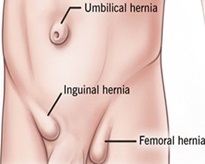
The word hernia comes from Latin, and means a rupture. The internal organs of the abdominal cavity are surrounded on all sides be a muscle layer of the abdominal wall. If pressure in the abdominal cavity increases, for example when you lift a heavy object, it is possible that part of the intestine breaks through the muscle layers. When this occurs, a so-called hernia sac protrudes outwards. It is often visible, or can be felt, as a lump under the skin. Hernias can occur in various parts of the body.
INGUINAL HERNIA
The most common type of hernia is the inguinal hernia. An inguinal hernia happens when contents of the abdomen, usually fat or part of the small intestine bulge through a weak area in the lower abdominal wall. The abdomen is the area between the chest and the hips. The area of the lower abdominal wall is also called the inguinal or groin region. Generally speaking, an inguinal hernia can be felt as a lump under the skin in the groin region.
Two types of inguinal hernias are
Indirect inguinal hernias, which are caused by a defect in the abdominal wall that is congenital, or present at birth
Direct inguinal hernias, which usually occur only in male adults and are caused by a weakness in the muscles of the abdominal wall that develops over time
VENTRAL HERNIA
A ventral hernia is a bulge of tissues through an opening of weakness within your abdominal wall muscles. It can occur at any location on your abdominal wall.
Many are called incisional hernias because they form at the healed site of past surgical incisions. Here abdominal wall layers have become weak or thin, allowing for abdominal cavity contents to push through.
In a strangulated ventral hernia, intestinal tissue gets tightly caught within an opening in your abdominal wall. This tissue can’t be pushed back into your abdominal cavity, and its blood flow is cut off. This type of ventral hernia is an emergency requiring surgery.
UMBILICAL HERNIA
An umbilical hernia occurs when part of the intestine protrudes through the umbilical opening in the abdominal muscles. Umbilical hernias are common and typically harmless. They are most common in infants, but they can affect adults as well.
INCISIONAL HERNIA
An incisional hernia is a type of hernia caused by an incompletely-healed surgical wound. Since median incisions in the abdomen are frequent for abdominal exploratory surgery, ventral incisional hernias are often also classified as ventral hernias due to their location.
After abdominal surgery in which an opening is made in the abdominal wall, the resulting scar creates a weak point in the muscle layer, through which body tissue can protrude.
HIATAL HERNIA
A hiatal hernia occurs when part of your stomach protrudes up through the diaphragm into your chest. The diaphragm is a sheet of muscle that helps you breathe by contracting and drawing air into the lungs. It separates the organs in your abdomen from those in your chest.
This type of hernia is most common in patients over 50 years old. If a child has the condition, it’s typically caused by a congenital (birth) defect. Hiatal hernias almost always cause Gastroesophageal Reflux (GERD), which is when the stomach contents leak backward into the oesophagus, causing a burning sensation.
What symptoms are caused by hernias?
Failure of the abdominal wall to close properly in the womb, which is a congenital defect
Chronic coughing
Damage from injury or surgery
Factors that strain your body and may cause a hernia, especially if your muscles are weak, include
Being pregnant, this puts pressure on your abdomen
Being constipated, this causes you to strain when having a bowel movement
Heavy weight lifting
Fluid in the abdomen or ascites
Suddenly gaining weight
RISKS ARE ASSOCIATED WITH HERNIAS
The weak point of the muscle wall will not close up by itself. In fact, the hernial opening will increase in size each time the hernia recurs. If the intestine trapped in the hernia sac, the blood supply may cut off and the tissue will die. Furthermore, the contents of the herniated section of the intestine may be pre4vented from passing through (bowel obstruction).
PELVINIC S APPROACH TOWARDS YOUR HERNIA PROBLEM
At PELVINIC , treatment plan is optimised according to different types of hernia and patients. The treatment plan is discussed with individual patient and explained. Dr Sandip Banerjee, a laparoscopic hernia repair expert does a variety of hernia repair methods. Laparoscopic surgeries include TAPP, TEP for Inguinal hernia, Laparoscopic Nissens / Toupets Fundoplication for Hiatus hernia problem. For ventral/ umbilical/ incisional hernia the procedure he performs is called as laparoscopic ventral hernioplasty.
Choice of mesh is an important factor which determines the efficacy of treatment outcome and overall cost attached to the procedure. Dr Banerjee prefers to use simple polypropylene meshes for inguinal hernia and composite dual meshes for ventral hernia. At Pelvinic, proper devised surgical guidelines help our patients to have highest number of successful results in hernia care.
The department of Proctology and General Surgery at Pelvinic Healthcare
has brought Second Medical Opinion Program to the comfort of your home at
Zero Cost. If you are facing a chronic medical issue like Fistula in ano,
Hemorrhoids, Fissure, Pilonidal Sinus, Recto Vaginal Fistula, ODS, Rectal Prolapse,
Hernia, Antireflux/GERD, then Pelvinic Second Opinion Program provides
access to world-class expertise that can inform your most important care decisions.
The program allows you to connect with our renowned team of doctors at zero cost.
We will review your medical records, imaging, and test results to advise you on
personalized treatment recommendations.
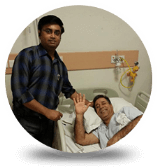
A designer by heart and professor in Pearls Academy. Pained by suffering from Anoproctological problems for long, sharing his smile with us for the kind of relief he got after being treated by Dr. Sandip Banerjee.
Mr. Atul Kumar Maurya
Ghazibad
For us, our "Reward" is the Trust that our patients repose on us and their
sweet ' Thanks moment '.
Mr Abdullah
Afghanistan
“Dr. Sandip diagnosed my medical Condition clearly and above all, gave the courage and filled me with confidence to go through the surgery.”
“It was a great experience with Doctors and Staff care, all staff was a friendly with good communication.
My father Rajendra prasad recently get Operated.
Piles is another term for Hemorrhoids. Hemorrhoids are collections of inflamed tissue in the anal canal. They contain blood vessels, support tissue, muscle, and elastic fibres. Many people have piles, but the symptoms are not always obvious
Yes, Piles of grade 1, 2 and 3 completely curable with laser surgical treatment. The success of laser treatment depends mostly on two things:-
1)Expert proctologist(doctor) 2) Laser fibre quality
Piles commonly appear during the last trimester of pregnancy. Some prominent conservative piles treatment options that can be considered under medical advice from the gynaecologist to provide immediate relief from symptoms of piles.
Most fissures heal within weeks to months by conservative treatment, but deeper fissures that become chronic may require treatment from a healthcare provider.
It may be performed at the same time as the abscess surgery, although fistula often develop four to six weeks after an abscess is drained sometimes even months or years later.
An anal fistula is a very rare sign of cancer. However, if left untreated for a long time, a fistula may lead to cancer. A fistula may also develop as a result of radiation therapy.
In some cases, fistulas may close up, but then reopen. Typically, fistulas do not heal on their own without treatment.
A rectovaginal fistula is an abnormal opening or connection between the rectum and vagina. Stool and gas from inside the bowel can pass through the fistula into the vagina. This can lead to leaking of stool or gas through the vagina.
It is surgery in which the healthy tissue between the rectum and vagina is stitched together to cover and repair the fistula. It’s completely curable post-surgery.
Only a doctor can tell you for sure since Pilonidal take different courses in different people. Some people may just experience a bit of a pain when sitting, others may only have some drainage and no pain, still others will be making a trip to the ER or surgeon because they are in excruciating pain. The usual signs of an acute infection are swelling and pain in the tailbone region. Most people end up at this site by Googling "tailbone pain". The most singular common symptom is discomfort in the area around the tailbone.
Pilonidal cysts sometimes drain and disappear on their own. If you have chronic pilonidal cysts, your symptoms may come and go over time.
Laser Pilonidal Sinus is an advanced laser procedure for Pilonidal Sinus. The main advantage of laser is faster recovery with negligible pain. It is suitable for the treatment of less complex, less infected small sinuses. Flap Reconstruction methods are suitable for the treatment of recurrent and large complex sinuses with severe infections.
Without any fluids (either as sips, ice chips or intravenously) people with a complete bowel obstruction most often survive a week or two. Sometimes it’s only a few days, sometimes as long as three weeks. With fluids, survival time may be extended by a few weeks or even a month or two
Removal of colorectal polyps is advised because there is no test to determine if one will turn into cancer.
There is no scientific data to support that allopathic or non-allopathic medicines cure gallstones. If one is asymptomatic we may follow up and operate once there is pain. Patients with gallstones are at risk for these life-threatening complications over the next 10 years. Therefore, cholecystectomy is mandatory in patients with symptoms.
Gall bladder removal doesn't shorten your life expectancy. In fact, it may even increase it as your post-surgery habits 'force' you to make healthier dietary choices.
Many people are able to delay surgery for months or even years. And some people may never need surgery for a small hernia. If the hernia is small and you don't have any symptoms, or if the symptoms don't bother you much, you and your doctor may simply continue to watch for symptoms to occur.
Hernias cannot heal on their own — if left untreated, they usually get bigger and more painful, and can cause serious health risks in some cases.
In certain cases, some health plans may require patients to have a second opinion before undergoing elective surgery like fistula in ano, rectovaginal fistula, pilonidal sinus, hernia repair, anal cancer etc.

 7000+ Successful Surgeries Performed